Renewing Enterprise Architecture
1. The Problem: Traditional Enterprise Architecture Is Out of Date
In the past, Enterprise Architecture (EA) tried to map out an entire enterprise. However, it gradually became disconnected from actual business needs.
- Too complex and slow: EA focused heavily on technical language, static documentation, and complicated frameworks (like TOGAF) and complex notations (such as ArchiMate).
- Isolated from business: EA acted like an isolated island instead of a bridge, using jargon that managers, employees, and customers could not understand.
- Missing the customer: Traditional EA focused on internal IT systems rather than creating real value for customers.
2. The Goal: A Modern, Shared Capability
Today’s organisations need to move fast, collaborate, and focus on customer needs. Enterprise Architecture must evolve into a shared capability: a common way of working that helps everyone understand how the organisation operates and changes.
EA needs three major shifts:
- From Documenter to Business Partner: EA should no longer just draw system diagrams. Instead, it must actively help leaders and teams make better business decisions at the right time.
- From Working Alone to Teamwork: EA must work closely with business lines, development teams, and service designers to combine customer-focused design with strong organisational structures.
- From Complex Jargon to Plain English: EA must replace heavy frameworks and technical modeling with a common language everyone understands. Modern AI tools should handle routine modeling so people can focus on problem-solving.
3. The Solution: Enterprise Design and EDGY
The ultimate solution is Enterprise Design and the EDGY framing language. Enterprise Design directly addresses all the traditional weaknesses of Enterprise Architecture:
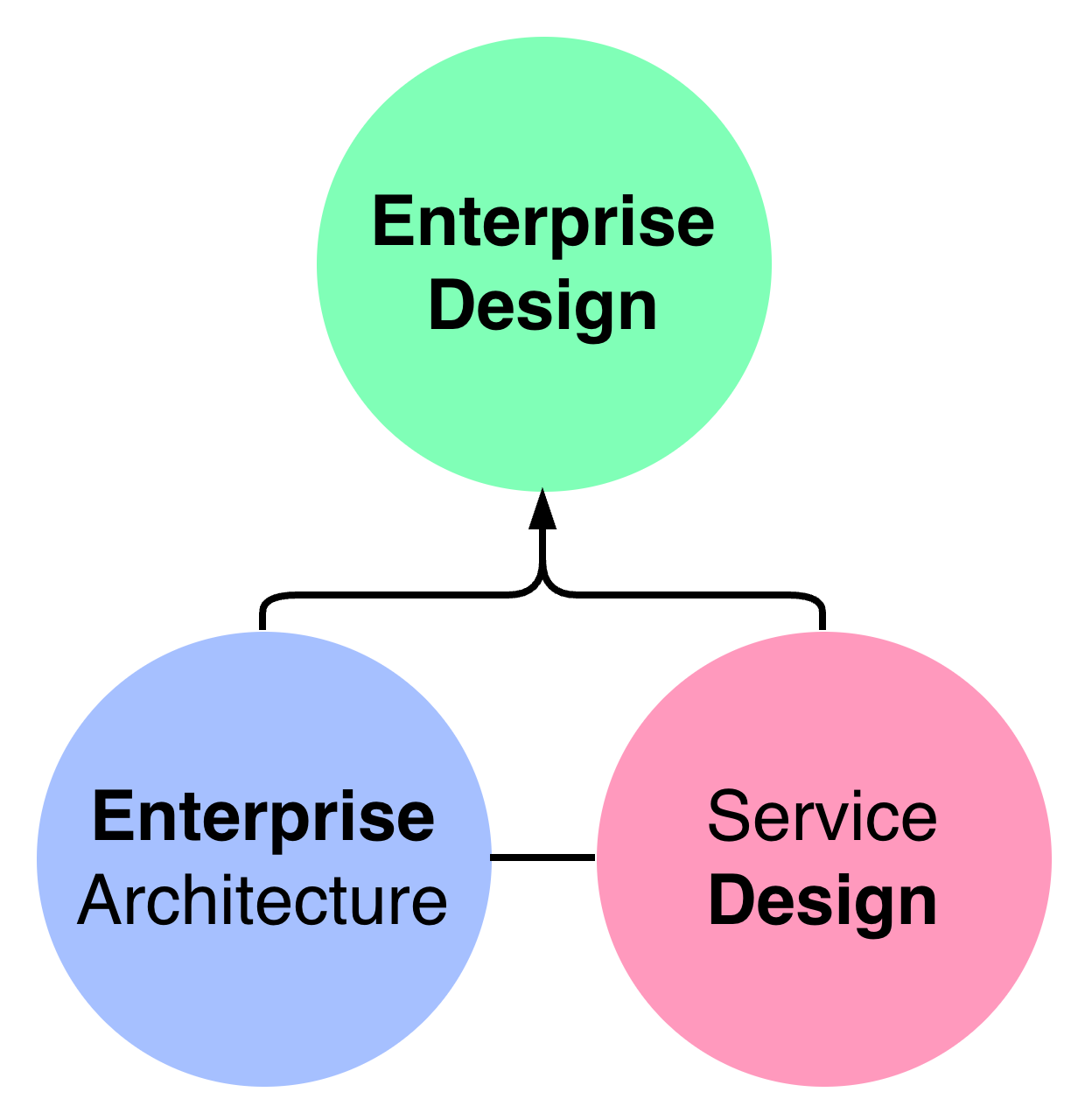
- Bringing strategy, customer experience, and architecture together: Enterprise Design combines business strategy, customer experience, and structural architecture into one shared discipline. Service design plays a crucial role by bringing a deep customer perspective into the collaboration, while Enterprise Architecture provides the internal behavior and organisational structures needed to directly support intuitive, human-centered experiences.
- A simple, common language: EDGY provides an open, easy-to-understand visual language. It complements complex technical notation(s) with simple concepts that business leaders, developers, and non-technical people can all easily understand and use together. See EDGY Fast Track.
- Bridging the gap: By connecting customer experience with back-end business structures, Enterprise Design ensures that architectural decisions directly support customer value and business goals.
Key Takeaways
- Enterprise Design solves EA’s biggest problems by uniting service design’s customer focus, business strategy, and architecture into a single practical approach.
- EDGY offers a universal language that replaces hard-to-understand jargon and technical modeling with clear, simple concepts for everyone.
- EA must focus on customer and business value, moving away from internal documentation toward helping leaders and teams make better decisions.
- AI accelerates routine tasks, giving architects more time to focus on strategic thinking, collaboration, and driving real change.
See also:
- Why Enterprise Design is the future we all need?
- EDGY Fast Track and pdf-version
- Enterprise Wheel -tool and pdf-version
Take a look: The EDGY Cookbook
— Eero Hosiaisluoma