For years, traditional Enterprise Architecture (EA) has promised to bring order to busy organisations. But let’s be honest: while we were drawing highly detailed diagrams, the real world moved on. Our diagrams look great to architects, but they fail the reality check of everyday business life. Why? Because traditional EA looks at things from the inside-out. It starts with IT systems, maps the internal processes, and hopes that a happy customer appears at the end. But hope and good ideas are not enough. The real value is created when we use these models together to design our future. It is time to change how we design our enterprises.
Why neither EA nor Service Design can win alone
To succeed today, we must shift our focus from inside-out to outside-in. This means starting with the actual experience of customers and employees, and then designing our enterprise to support that experience.
But here is the catch: neither of our favorite disciplines can do this alone. In fact, both are currently facing an identity crisis:
- Enterprise Architecture is brilliant at structure, governance, and scale. But it lacks empathy – customer experience. It is often perceived as a slow, academic “no-saying” approach that is disconnected from customer reality. Cumbersome EA-frameworks such as Togaf and hyper-detailed ArchiMate diagrams don’t resonate with business people.
- Service Design is brilliant at empathy, customer journeys, and rapid innovation. But it lacks scale, internal behavior and structure. Too many beautiful post-it note concepts die a quiet death because they can’t be integrated into the complex, rigid reality of the enterprise’s business and operating model, with the actual applications and data used in internal processes.
If we keep them separated, we get technically perfect systems that nobody wants to use, or beautiful customer experiences that the enterprise cannot actually deliver.
Stop talking architecture, and start talking customer- and business value.
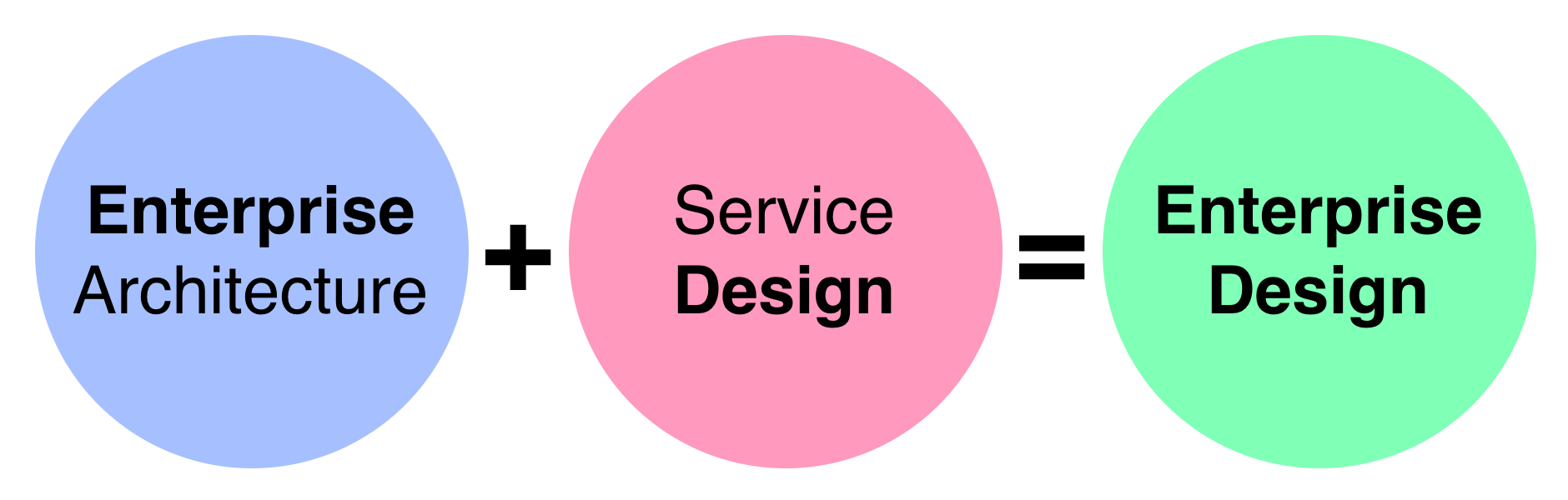
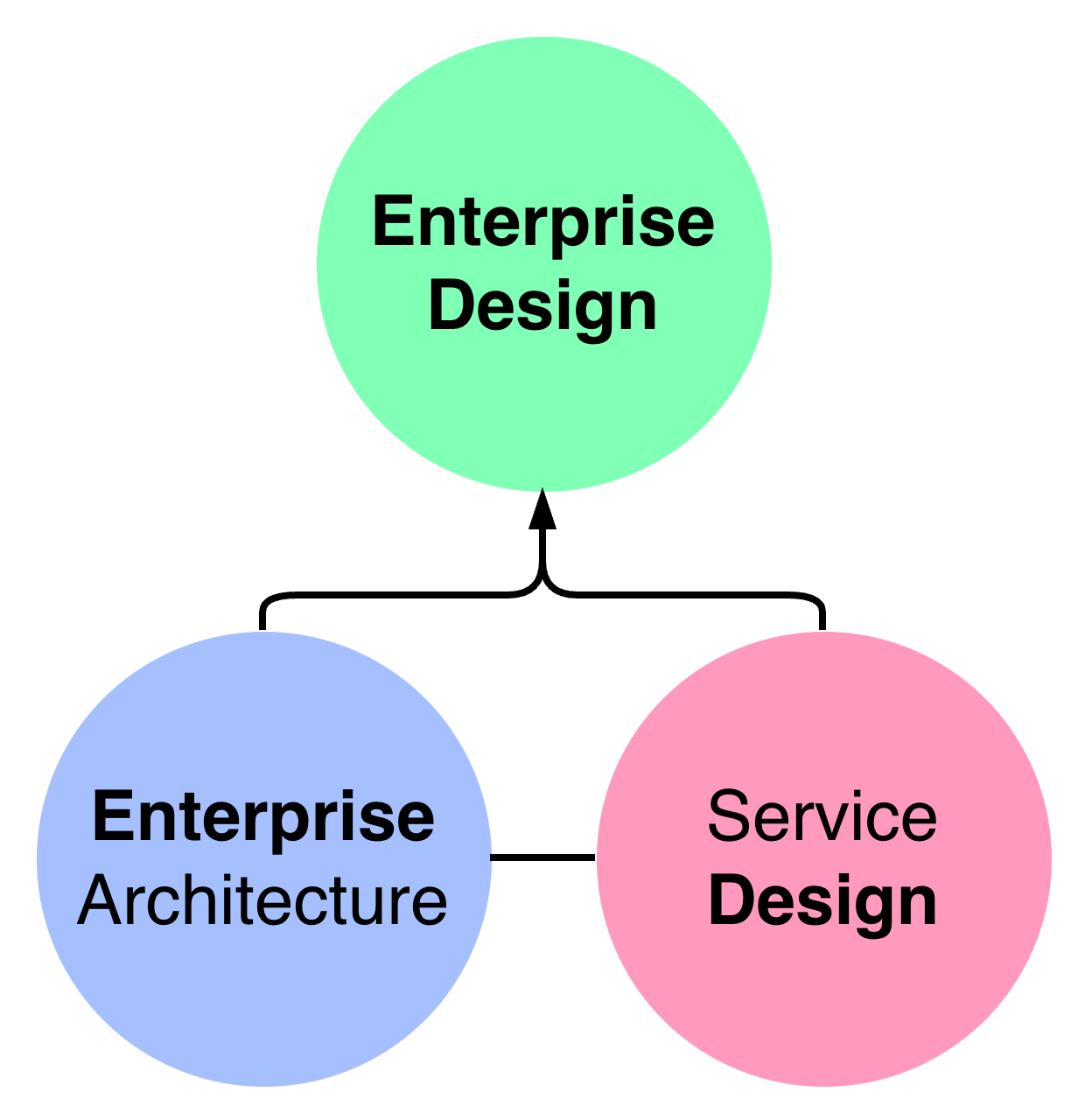
Enterprise Architecture + Service Design = Enterprise Design
The answer is not a new, complex architecture book. The answer is moving to a new level: Enterprise Design.
When we combine the strength of architecture with the human-first approach of service design, we get the best of both worlds:
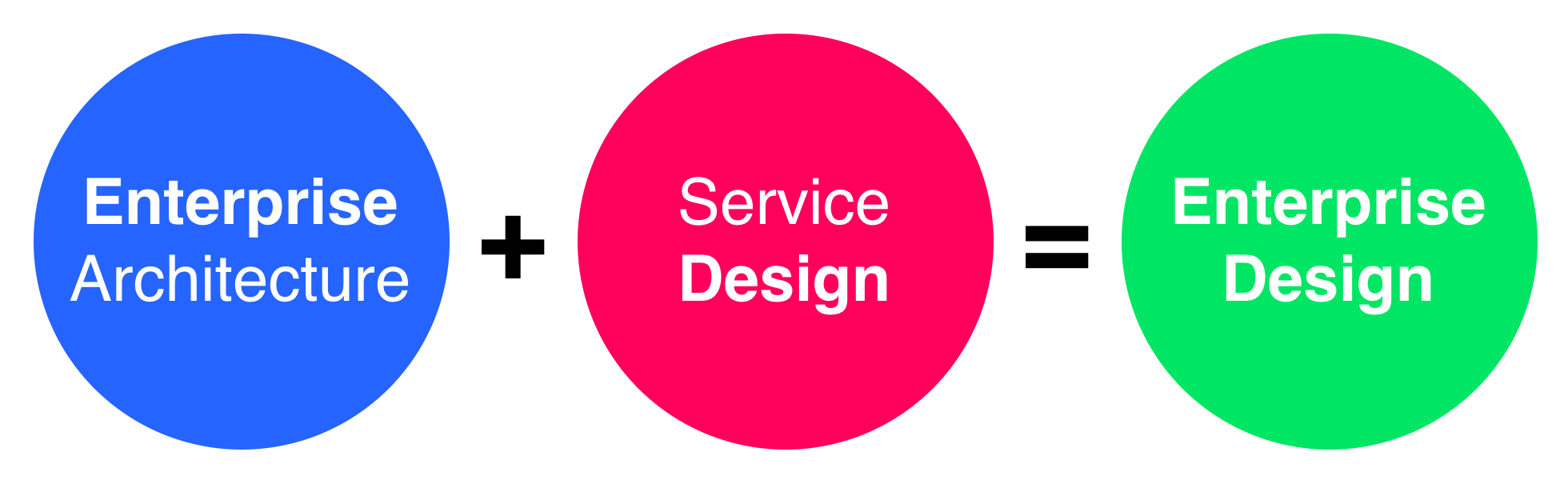
Enterprise Design respects technical realities while keeping the human experience at the center. It connects business strategy, daily operations, and customer experience.
Speak a Shared Language with EDGY
To make this collaboration happen, we must stop using difficult language. We cannot use complex notations that only a few experts understand.
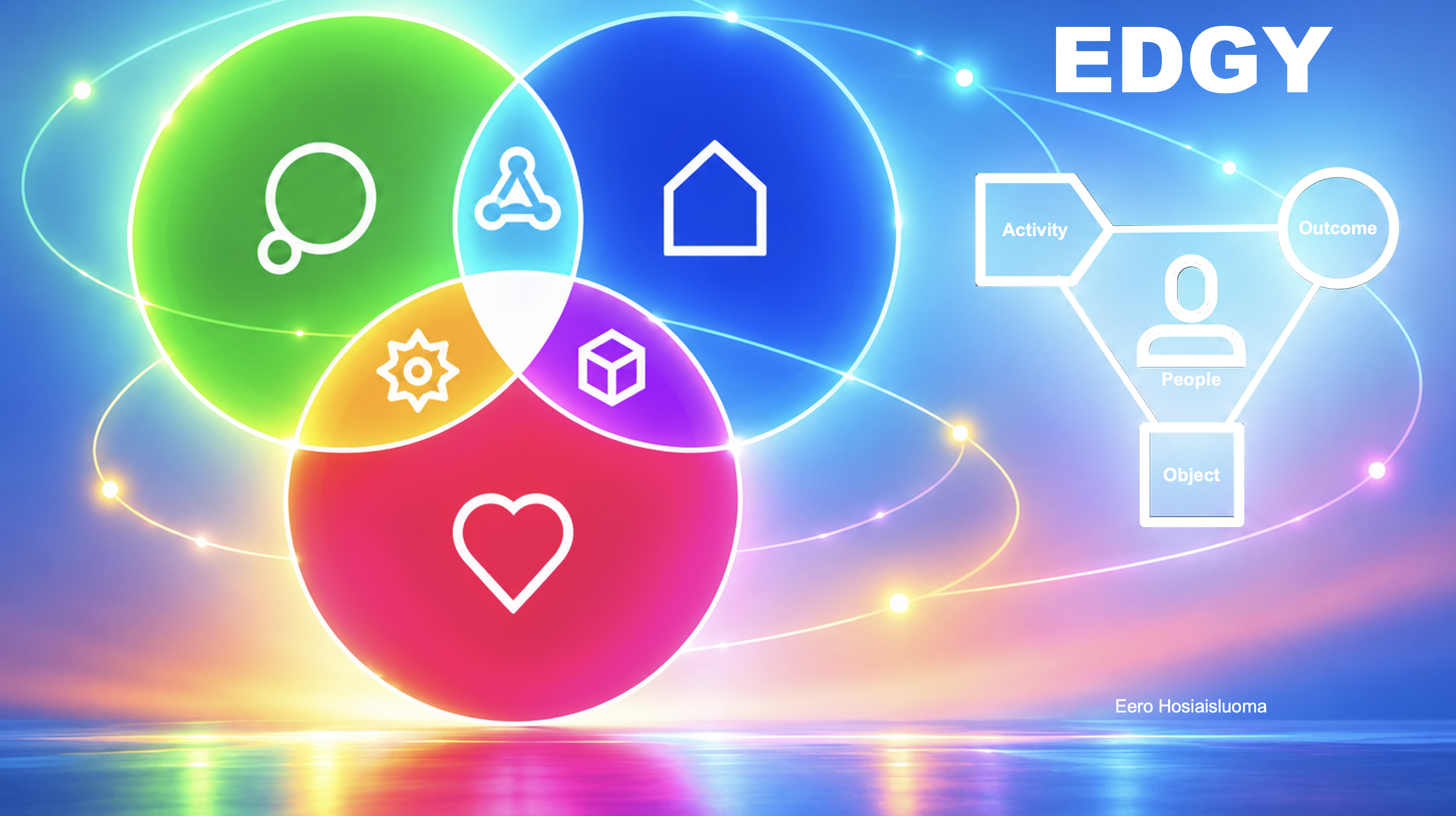
Instead, Enterprise Design uses EDGY-a simple, visual language made for everyone to use together.
- Simple for Everyone: EDGY uses clear, simple basic elements (like People, Capabilities, Journeys, and Products) that managers, developers, and designers all understand immediately.
- Highly Practical: It shows exactly how a customer’s journey connects to the actual processes and IT systems.
- Made for Collaboration: It is designed for active workshops with cooperation, not for solo specialists working alone.
Let’s Build Together
To the architects who love structure and order: your skills are highly valuable. We need your ability to understand complex systems. But to make the biggest impact, that structure must serve the real world. By moving to Enterprise Design and using EDGY, we can stop working in separate silos. Together, we can design enterprises that truly work for everyone – both inside and outside the enterprise.
See what the Enterprise Design with EDGY is: link
Take a look: The EDGY Cookbook
— Eero Hosiaisluoma
See also:
- Enterprise Architecture Renewal – a how-to make it easy
- EDGY Fast Track and pdf-version
- Enterprise Wheel -tool and pdf-version
— Eero Hosiaisluoma